| With
production starting in 1959, by the late 1960s hundreds of thousands of
Dynaco
Stereo 70 power amplifiers were in use world-wide, more than any
other
stereo power amplifier. And in the 1990s, about 25 years after their
heyday,
there were still many thousands in use internationally. |
| In
the early 1990s there was a resurgence of interest in "vacuum tube
audio"
as evidenced by the growing number of newly designed vacuum tube based
audio products appearing in trade magazines and showing up at trade
shows
around the world. |
| In
1991 the Dynaco company had been purchased by the Panor Corporation of
Hauppauge New York, and in 1993 the Stereo 70 design was updated,
becoming
the new Stereo 80 (vacuum tube version). |
|
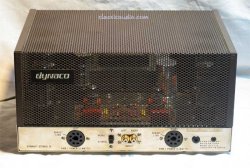 The
Dynaco Stereo 70
The
Dynaco Stereo 70
Vacuum
Tube Amplifier
|
|
|
| The
original Stereo 70 amplifier used EL34 output tubes and put out about
35
watts per channel. The updated vacuum tube version Stereo 80 also used
EL34 output tubes, supplying about 40 watts per channel. |
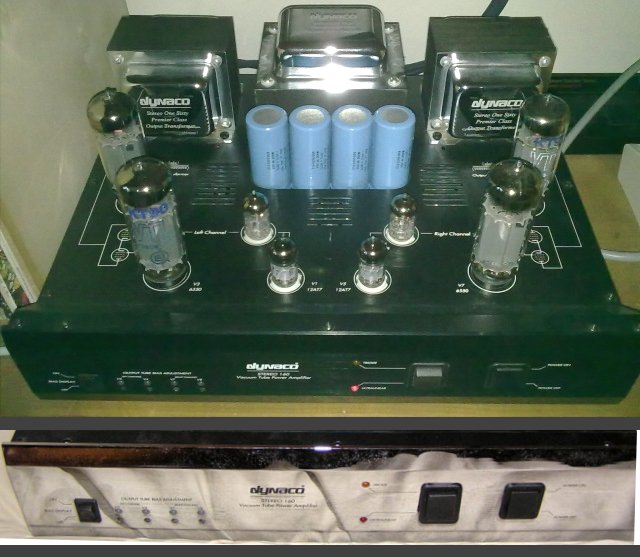
| Additionally,
shortly after the release of the updated vacuum tube Stereo 80, there
became
available the Stereo 160 power amplifier, which used 6550 type output
tubes,
supplying about 75 watts per channel. It was, however, built on the
exact
same size chassis as the vacuum tube Stereo 80, and so looked very
similar
to it. |
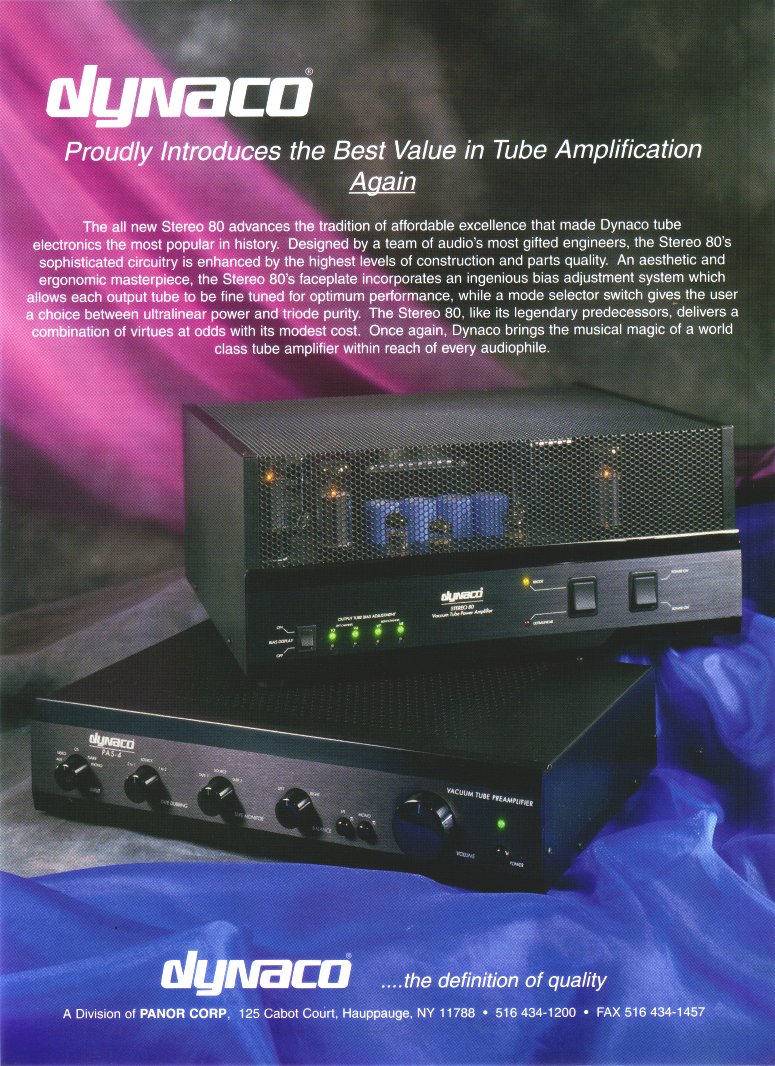
| The
magazine ad from 1994 (below) introduces the modernized vacuum tube
Dynaco
Stereo 80 - and the upgrade to the PAS-3 preamplifier, the modernized
PAS-4
vacuum tube preamplifier. |
|
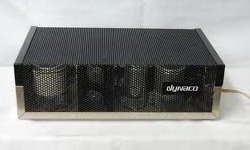 Note:
There also existed
the Dynaco
Note:
There also existed
the Dynaco
Stereo
80 Solid State Power
Amplifier
|
|
| The
task of updating the circuitry for the vacuum tube Stereo 80, Stereo
160,
and PAS-4 was accomplished by John Nunes in San Jose, California. The
PC
board designs were done by Arn Roatcap in Sunnyvale, California. The
factory
assembly of these three products was done for Dynaco by TIBI
Electronics
in Los Angeles. |
-
|